
Somewhere in the narrow by lanes of Lyari, in an old ill lit cafe named Chai and Biryani cafe’, Aalam (Gaurav Gera) and Hamza(Ranveer Singh) sit facing each other. The space between them modest, two cups of noon chai(salt tea) placed like an old puzzle on the table. This meeting isn’t random. Hamza is still learning how to disappear into his cover, performing the small, ordinary tasks that make a false life believable. But the disguise comes at a cost, decisions that blur the edges of right and wrong. Aalam recognizes the weight of that moment, he’s been there. So he takes Hamza back to where it all started, to remind him what survives when everything else is stripped away.
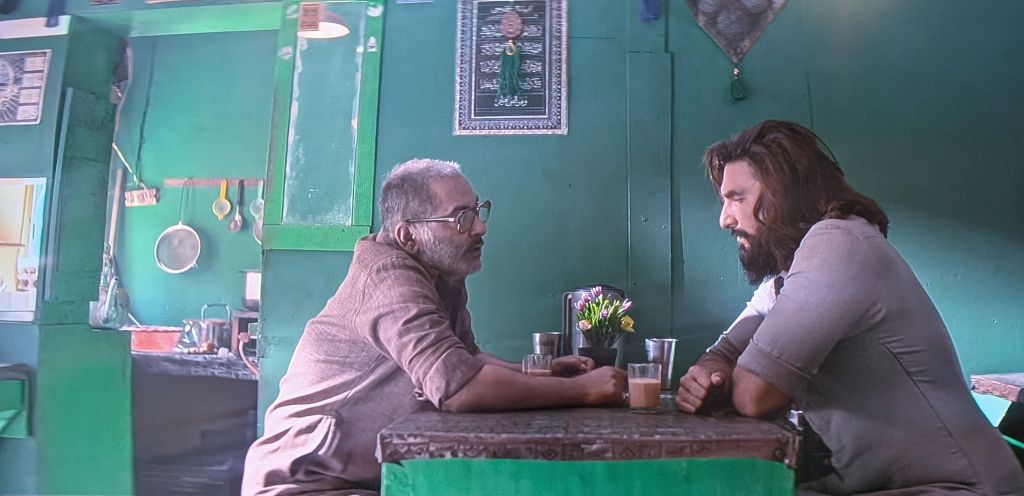
“Apne Butt sahab chai mein namak daalte hain. Yahan ke logon ko ye waahiyaat lagti hai, lekin mujhe pasand hai.”
The salt tea steams gently, pale pink, carrying the smell of warmth and habit. A moment away from the high-octane pulsating life of Lyari, Butt sahab’s cafe seems like a small corner of refuge stolen from the past. Outside, the world feels held back, as if time has agreed to wait. This scene seems insignificant until it isn’t.
“Mere gaon mein sirf khaara paani tha, chai bhi namkeen banti thi. Yahan ki chai mujhe mere ghar ki yaad dilati hai ”
Aalam talks about home, not in grand declarations, but in fragments. There are no flashbacks, may be he’s been away for too long that the images have faded away and now memories are stirred only by smell, spices and songs. Sometimes a ghazal that knows the way back better than memory does. Aalam’s voice doesn’t ache; it remembers. Each sentence is measured, like someone touching a wound only to confirm it’s still there.
Hamza, on the other hand, still carries flashbacks. His past returns to him in clear frames, intact and unweathered. He is young, newly inducted into this world, his memories still fresh, still obedient. Nothing about his past feels stale or eroded by distance. He listens more than he speaks, aware that what Aalam carries is older, heavier, and harder to retrieve.
The salt in the tea mirrors the conversation: understated, grounding, acquired. It’s a meeting where nothing dramatic happens, no revelations, no turning points, yet something shifts. Aalam leaves a part of his home on that table, and Hamza, without saying so, agrees to carry it for a while. What the characters don’t and cannot say is filled in with the verse from Ghulam Ali’s famous ghazal Chupke Chupke playing in the background “Mudatein guzri par ab tak woh thikana yaad hai”.
Aalam savors the sips, Hamza pukes it back in the cup. Aalam laughs out as if expecting this to happen.
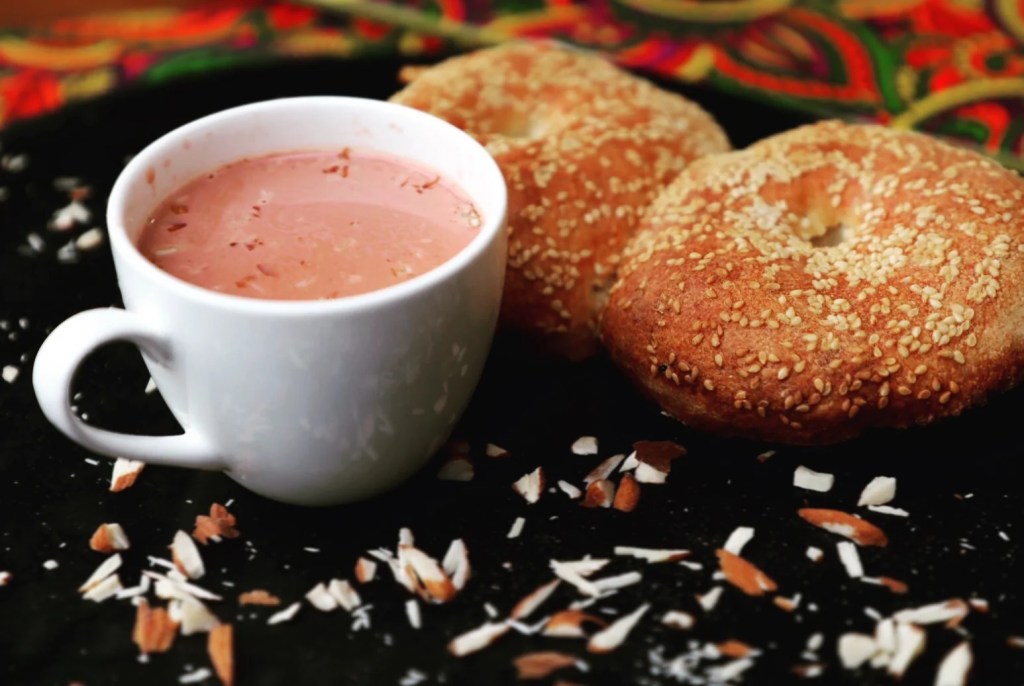
The scene carried me straight back to Kashmir, summoning memories of our beloved salt tea, Sheer (Noon) Chai.
While Kehwa may have achieved a romanticized, celebrity status as a customary offering for guests, but among Kashmiris themselves, it is Sheer( Noon) Chai that is offered like Secret spy code. This chai requires a degree in alchemy of Kashmiris spices, it requires patience and a lot of it. The maker and the drinker both are are willing to wait, it is its an acquired taste, reserved for the initiated—never meant for beginners.
How this chai travelled and found a permanent place in Kashmir and how some garnish it with milk, malai , almonds and saffron is a topic for another day.
If you are tempted to follow a recipe and make it yourself. DON’T ! As Aalam said Waahiyaat lagegi. The ingredients seems simple but are culturally double encrypted like Hamza’s invisible ink. Have an adult Kashmiri guide you when attempting to make it the first time.
Directed by Aditya Dhar, Produced by Aditya Dhar, Lokesh Dhar.
Cast : Ranveer Singh, Akshaye Khanna, Gaurav Gera, Sara Arjun, R Madhavan
Research Consultant : Aditya Raj Kaul
Music : Shashwat Sachdev
 Sunayana Kachroo